
Kottayam Port Sends First Container to Vizhinjam, Exporter Reports USD 3,000 Saving Over Kochi
19 tonnes of rubber mats bound for Toronto open a new central Kerala export route
Summary
Kottayam Port dispatched its first container to Vizhinjam on September 11, carrying rubber mats for Toronto, with the exporter reporting savings of about USD 3,000 against Kochi.
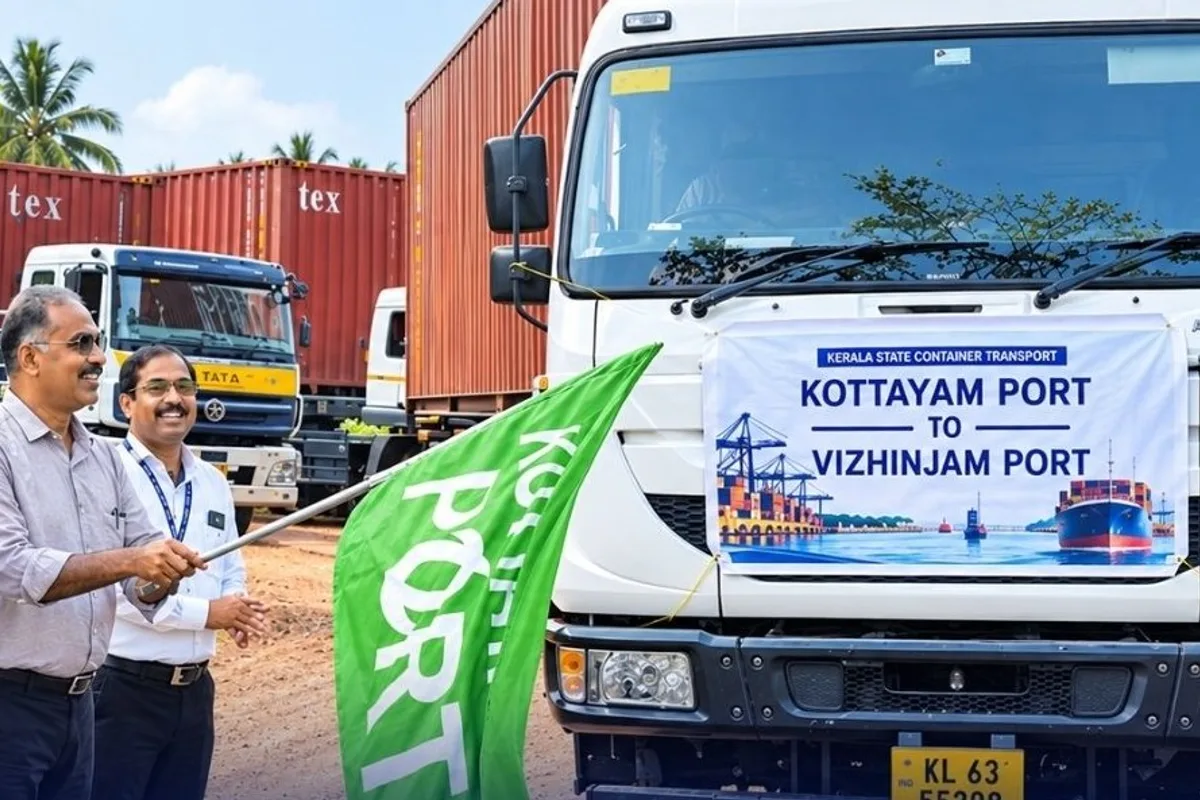
Kottayam Port has sent its first export container to Vizhinjam International Seaport. The container left at about 6.30 pm on September 11 and reached Vizhinjam the same night. It carried more than 19 tonnes of rubber mats bound for Toronto, Canada.
Customs Assistant Commissioner V.R. Vijayakumar flagged off the shipment. Kottayam Port Managing Director Abraham Varghese and General Manager Rupesh Babu attended the ceremony.
Cost advantage over Kochi
The rubber mats were exported by KP Group of Industries. According to the exporter, routing the container through Vizhinjam cost about USD 3,000 less than shipping it through Kochi Port. At current exchange rates, that is roughly ₹2.75 lakh per container.
Mumbai-based Team World Logistics acted as the freight forwarder. Kochi customs house agent Ancheril Agencies handled clearance.
Wider hinterland for Vizhinjam
Kottayam Port officials said the route gives exporters and importers in central Kerala a cheaper way to reach international markets. The general manager said traders from neighbouring states have also started approaching the port for export and import services.
Until recently, much of the export cargo from Kerala and Tamil Nadu went through Kochi or Thoothukudi to Colombo and was transshipped there. Vizhinjam allows that cargo to connect directly with mainline vessels calling at an Indian port. Regional reports point to spices and coir products, along with rubber goods, as cargo that could use the Kottayam route.
What comes next
A single shipment shows the route works. It does not yet show a commercial corridor. Whether the Kottayam to Vizhinjam link becomes regular will depend on consistent cargo volumes, the availability of containers, road transit times, and whether the cost gap over Kochi holds up at scale.
Sources
- Malayala Manorama — വികസന പ്രതീക്ഷയ്ക്ക് പുതിയ ചിറകുകൾ; കോട്ടയം പോർട്ട് – വിഴിഞ്ഞം ആദ്യ കണ്ടെയ്നർ പുറപ്പെട്ടു
- Logistics Outlook — Kottayam Port begins first container movement to Vizhinjam
- Maritime News — Kottayam Port Begins First Container Movement to Vizhinjam, Opening New Kerala EXIM Route
- ETV Bharat Kerala — വിഴിഞ്ഞം വഴി ലോകത്തേക്ക്; കോട്ടയം പോർട്ടിൽനിന്ന് ആദ്യ കണ്ടെയ്നർ പുറപ്പെട്ടു
- Vachakam — കോട്ടയത്തുനിന്ന് വിഴിഞ്ഞം വഴി ടൊറന്റോയിലേക്ക്
- World Malayalee Voice — വിഴിഞ്ഞം വഴി കോട്ടയം പോർട്ടിൽനിന്ന് ആദ്യ കണ്ടെയ്നർ പുറപ്പെട്ടു
- Kerala Kaumudi — Kottayam Port cargo via Vizhinjam (video)